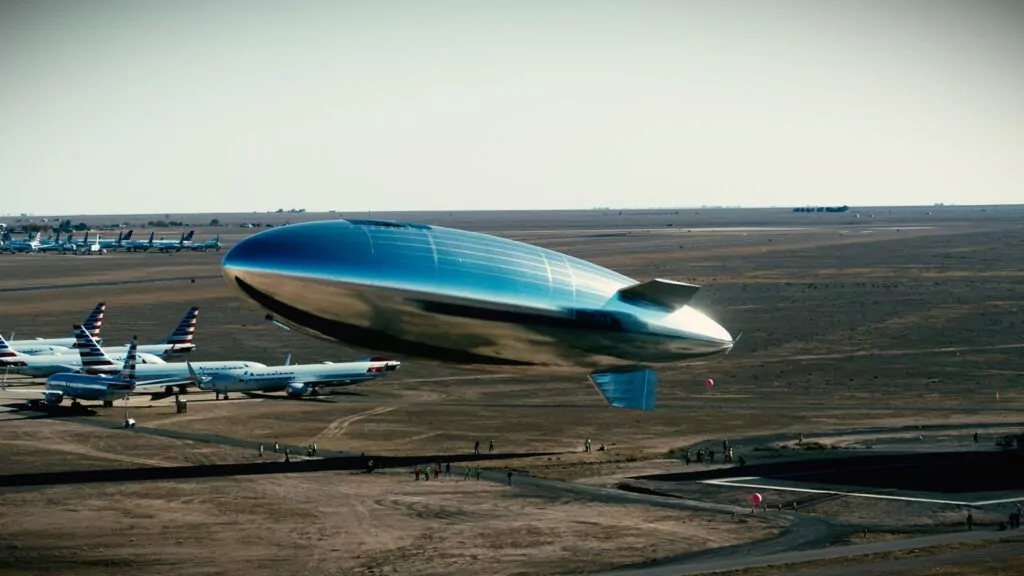
Sceye HAPS Specs Include: Endurance, Payload And Breakthroughs In Battery Technology
1. Specifications show you what the Platform Will Actually Do
There’s a tendency within the HAPS industry to speak about ambitions instead of engineering. Press releases explain coverage areas Partnership agreements, coverage areas, as well as commercial timelines, but the more difficult and more detailed discussion is about specifications – what the vehicle actually has to carry as well as how long it remains on the road, and the energy systems that make long-term operation possible. For anyone trying figure out whether a stratospheric platform is real-time mission-capable or remains in the prototyping phase, capacities for payloads, endurance estimates and battery efficiency are where the meat of the matter lives. Vague commitments to “long endurance” and “significant payload” are simple. Delivering both simultaneously at stratospheric altitude is the technical challenge that distinguishes reliable programs from fanciful announcements.
2. Lighter than Air Architecture Modifies the Payload Equation
The main reason why Sceye’s airship design is able to carry a significant payload is that buoyancy handles the main task to keep the vehicle afloat. This is not an insignificant difference. Fixed-wing solar aircraft must generate aerodynamic lift continually which is a major energy consuming process and creates structural limitations which limit the extra mass the vehicle is able to transport. A floating airship at the top of the atmosphere doesn’t use energy fighting gravity the same way, which means the power generated by its solar array and also the structural capacity of the vehicle could be directed towards propulsion, station keeping, and the operation of the payload. This creates an ability to payload that fixed-wing HAPS designs that have similar endurance genuinely struggle to match.
3. Capacity of Payload Determines Mission Versatility
The value of a greater capacity for payloads becomes apparent as you think about the kind of stratospheric operations actually demand. The payload of telecommunications – antenna systems as well as signal processing hardware beamforming equipment — has an actual weight and volume. So does a greenhouse gas monitoring suite. A wildfire detection of earth observation. To run one of these tasks effectively requires equipment with mass. Multi-tasking requires more. Sceye’s airship requirements are formulated on the basis that a platform in the stratospheric region should be capable of carrying a valuable combination of payloads rather than requiring operators to choose between observation and connectivity, since the vehicle isn’t able to accommodate both at once.
4. Endurance Is Where Stratospheric missions can win or lose
A platform that can reach stratospheric elevation for the duration of 48 hours prior drop is useful for demonstrations. The ability to hold a position over a period of months or weeks times is beneficial for making commercial services. The difference between these two outcomes is almost entirely an energy based issue — specifically, whether or not the vehicle can produce sufficient solar power during daylight to power all of its equipment and recharge its batteries sufficiently to maintain its full functionality throughout the night. Sceye endurance goals are based on this challenge to the diurnal rhythm, treating overnight energy sufficiency not as a flimsy goal but as the baseline of the design criteria that everything else must be designed around.
5. Lithium-Sulfur batteries are a real Step in the Right Direction
The chemistry in the batteries that power conventional electronic devices and electric vehicles — primarily lithium-ion possesses density characteristics that lead to real problems for stratospheric endurance. Every kilogram of mass carried up will not be available to payload. However, you’ll require enough stored energy to keep an enormous platform running through a tense night. Lithium sulfur chemistry can alter this equation significantly. With energy densities that can reach 425 Wh/kg lithium-sulfur batteries are able to store significantly more energy per pound than similar lithium-ion cells. In a vehicle that is weight-constrained, where every Gram of battery mass will have potential costs in payload capacity, that growth in energy density won’t be an incremental change, it’s architecturally significant.
6. Advances in Solar Cell Efficiency the Other Half of the Energy Story
The energy density of the battery is the measure of how much power you can save. Solar cell efficiency will determine how quickly you’ll be able to replenish it. Both matter, and progress for one without progression in the other produces a lopsided energy architecture. High-efficiency photovoltaic technology such as multi-junction models that harness a greater spectrum of solar energy compared to conventional silicon cells – have substantially improved the amount of energy available to solar-powered HAPS vehicles at all hours. When combined with lithium-sulfur storage these improvements are what makes the closed power loop feasible: creating and storing enough energy each day to power all systems with no external energy input.
7. Station Keeping Draws Constantly from the Energy Budget
It’s easy to see endurance solely in terms of getting up, but in a stratospheric structure, staying floating is only a tiny part of the energy equation. Station keeping – making sure that the platform is in a good position to withstand stratospheric via continuous propulsion consumes power continuously and makes up a substantial portion of energy consumption. The energy budget must be able to accommodate station keeping along with payload operation, avionics, thermal management, and communications systems simultaneously. This is why specs that mention endurance but do not specify which systems are running at the time of endurance are difficult for evaluating. Real endurance numbers assume full operating load, not a basicly designed vehicle with payloads turned off.
8. The Diurnal Cycle Is the design constraint that everything else Comes from
Stratospheric engineers speak about the diurnal cycle – the rhythmic daily cycle for solar energy availabilityas the main constraint on which platform architecture is built. At daytime the solar array should generate enough power to run all systems and charge the batteries to their capacity. In the night, the batteries need to sustain the entire system until sunrise, without losing its position, decreasing their performance or entering any kind of reduced-capability mode that would disrupt a continuous monitoring or communication mission. Making a vehicle which threads this needle continuously for day after day, for months at a stretch is the primary problem in the engineering of solar-powered HAPS development. Every single specification choice including solar array size cell chemistry, battery effectiveness, payload power draw -is a part of this main constraint.
9. This is because the New Mexico Development Environment Suits This Kind of Engineering
In the process of developing and testing a stratospheric airship requires infrastructure, airspace and conditions in the atmosphere which aren’t readily available everywhere. Our base at New Mexico provides high-altitude launch and recovery capability, clear weather conditions to test solar power additionally, access continuous, uninterrupted airspace that is required for continuous flight testing. Of the aerospace companies operating in New Mexico, Sceye occupies an exclusive position, that is focused on stratospheric lighter platforms, as opposed to the traditional rocket launch plans associated with the region. The engineering rigor required to verify endurance claims and the battery’s performance under actual stratospheric conditions is exactly the kind of work that benefits from a specially-designed test environment rather than the opportunistic flights that are common elsewhere.
10. Specifications that can withstand Examination Are What Commercial Partners Demand
In the end, the main reason that specifications are important beyond the technical aspect is that commercial partners making investing decisions need to be sure whether the numbers are factual. SoftBank’s commitment to a nationwide HAPS network for Japan with a focus on pre-commercial services from 2026 on, is based upon the certainty that Sceye’s platform will perform as described under operating conditions not only in controlled tests but also throughout the mission durations that commercial networks need. Payload capacity that can stand up in full telecommunications, an observation suites on board endurance-based figures that are confirmed through actual stratospheric operation, and battery performance proven over real days are what help transform a promising aerospace project into the infrastructure that a major telecoms operator is prepared to stake its network plans on. Have a look at the top sceye services for site advice including sceye services, Sceye Wireless connectivity, non-terrestrial infrastructure, what haps, sceye haps softbank japan 2026, High altitude platform station, Sceye Softbank, detecting climate disasters in real time, softbank investment in sceye, sceye haps project status and more.

The Detection Of Wildfires And Disasters From The Stratosphere
1. The Detection Window is the most Important Thing You can Extend
Every significant disaster has a time which can be measured in minutes, but sometimes in hours — when earlier awareness could have altered the outcome. A wildfire spotted when it covers a quarter of hectare is an issue with containment. The same fire discovered after it has spread to fifty hectares is a catastrophe. The release of industrial gases detected in the initial twenty minutes can be controlled before it escalates into a public health emergency. The same release was found at the end of the day, whether through in a ground survey or by a satellite that is passing overhead for its scheduled revisit, has already turned into a problem for which there is no solution. Extending the detection window is arguably the single most valuable thing that better monitoring infrastructures could deliver, and persistent observatory of the stratospheric is one the few ways to alter the window effectively rather than just marginally.
2. Wildfires are getting harder to monitor with the existing infrastructure
The scale and frequency of wildfires over the past few years has outpaced the monitoring infrastructure created to monitor them. Underground detection networks watchtowers, sensor arrays, ranger patrols – are able to cover a small area too quickly to contain fast-moving wildfires in their beginning stages. Aircrafts’ responses are effective but costly, weather dependent and reactive instead of anticipatory. Satellites fly over a area according to a frequency measured in hours. This means that a fire that erupts to spread, then gets a crown, and continues to grow between passes generates no early warning. The combination of larger fires with faster spreading rates caused through drought, as well as complicated terrain results in a monitoring gap that conventional approaches can’t close structurally.
3. Stratospheric Altitude Provides Persistent Wide-Area Visibility
A platform operating at a height of 20 kilometres above surface will provide continuous visibility for a wide area of ground that spans several hundred kilometers including areas prone to fire, coastlines, forest margins and urban interfaces in one go and without interruption. Contrary to aircrafts it doesn’t have to return to fuel. It’s not like satellites. fade over the horizon on the repetition cycle. In the case of wildfire detection, this constant wide-area coverage means that the device is monitoring whenever ignition takes place, observing when it spreads initially, and watching for changes in fire behavior offering a continuous data stream instead of a set of disconnected snapshots emergency managers need to interpolate between.
4. thermal and Multispectral Sensors are able detect fires Before Smoke Is Visible
A number of the most useful techniques for detecting wildfires don’t wait to see visible signs of smoke. Thermal infrared sensors are able to detect heat anomalies consistent with ignition before the fire has created any visible sign of it (for example, identifying hotspots in dry vegetation as well as smouldering fires in forest canopy and the initial signs of heat that fires are beginning to spread. Multispectral imaging enhances the capabilities by detecting changes in vegetation condition — moisture stress, drying, browning -and indicating an increased risk of fire in particular areas before the ignition event takes place. A stratospheric platform equipped with the sensor and camera provides an early warning about active ignition and an underlying prediction of where the next fire is most likely, which differs in the qualitative quality of awareness that conventional monitoring delivers.
5. Sceye’s Multipayload Approach Mixes Detection with Communications
One of the complexities of major disasters is that the infrastructure we rely on for communication including mobile towers power lines, internet connectivity — is often among the first items to be destroyed or flooded. An stratospheric device that houses both disaster detection sensors and telecommunications payload tackles this issue with a single vehicle. Sceye’s strategy for mission design examines connectivity and monitoring as complementary functions rather than competing ones. The system that detects a growing wildfire is also able to provide emergency messages to responders in the field whose land networks are dark. The satellite tower does not just view the calamity It keeps everyone connected through it.
6. Emergency Detection Goes Beyond Wildfires
While wildfires are one of the most compelling scenarios for persistent stratospheric monitoring, the same platform capabilities apply across a wider array of scenarios for disaster. Floods can be monitored as they progress across river systems and coastal zones. Aftershocks from earthquakes — that include broken infrastructure, roads blocked and population displacementcan benefit from a rapid, wide-area assessment that ground crews cannot perform in a sufficient time. Industrial accidents releasing harmful gases or oil pollutants into coastal waters generate signatures visible to sensors that are able to detect them from stratospheric altitude. The ability to detect climate disasters in a real time across these categories requires monitoring layer that’s always there at all times, watching constantly, and capable of distinguishing between normal environmental fluctuations and the signs of emerging crises.
7. Japan’s Natural Disaster Risk Profile Makes the Sceye Partnership Particularly Relevant
Japan experiences a large share of the world’s important seismic natural disasters. It also experiences regular and severe typhoons, which affect the coastlines, and has witnessed a number of industrial accidents needing a swift response from environmental monitors. The HAPS partnership with Sceye and SoftBank, targeting Japan’s nationwide network, and precommercial services until 2026, sits directly between stratospheric connectivity and disaster monitoring capabilities. A country with Japan’s risk and technological sophistication could be the most natural early adopter for stratospheric infrastructure which combines protection from coverage and real-time observations offering both the communication backbone disaster recovery relies on, as well as the monitoring layer which early warning systems require.
8. Natural Resource Management Benefits From the Same Monitoring Architecture
The ability to detect and persist that make stratospheric platforms highly effective for detecting wildfires and other disasters are directly applicable to natural resource management. They operate over longer timescales, yet require similar levels of monitoring. Forest health monitoring — monitoring the spread of disease in the form of illegal logging, vegetation changes — reaps the benefits of continuous observation that can detect slow-developing threats before they are acute. Monitoring of water resources across large catchment areas, coastal erosion tracking, as well as the monitoring of protected areas from Encroachment are just a few examples of how surveillance from a high-altitude platform delivers actionable information that visits to satellites or expensive aircraft surveys are not able to replace cost-effectively.
9. The founder’s mission defines why disaster detection is the most important aspect of our work.
Understanding why Sceye place such an emphasis on the prevention of environmental disasters and monitoring as opposed to treating connectivity as the key objective and observation as a secondary benefitis a matter of understanding the original strategy that Mikkel Vestergaard was the founder of the company. The background of applying advanced technology to massive humanitarian issues produces a different set of the priorities for design than a commercial telecommunications company would. The ability to detect disasters can’t be built into a connectivity platform in the form of a value-added component. This is an indication of a belief that stratospheric infrastructure is active in solving the types of emergencies — climate natural disasters and environmental crises as well as emergencies that require prior and more reliable information transforms outcomes for the populations that are affected.
10. Continuous Monitoring changes the relationship Between Data and Decision
The bigger change that the stratospheric disaster warning system can provide isn’t just a faster response to events that occur in isolation there’s a change in the way decision-makers think about climate risk throughout time. If monitoring is intermittent, the decisions regarding resource deployment, preparation for evacuation, and infrastructure investment are taken under significant uncertainty about circumstances. When monitoring is continuous and continuous, the uncertainty grows dramatically. Emergency managers working with the ability to monitor in real-time from a constant stratospheric monitoring platform above the area of their responsibility take decisions from a very different point of view than those who depend on scheduled satellite passes or ground reports. That shift from periodic snapshots to continuous monitoring of the situation is the reason that stratospheric geo-observation through platforms like those created by Sceye truly transformative, rather than more incrementally valuable. View the top High altitude platform station for site tips including whats the haps, high-altitude platform stations definition and characteristics, aerospace companies in new mexico, Lighter-than-air systems, HAPS technology leader, softbank haps, Stratospheric infrastructure, sceye softbank partnership, Diurnal flight explained, sceye services and more.